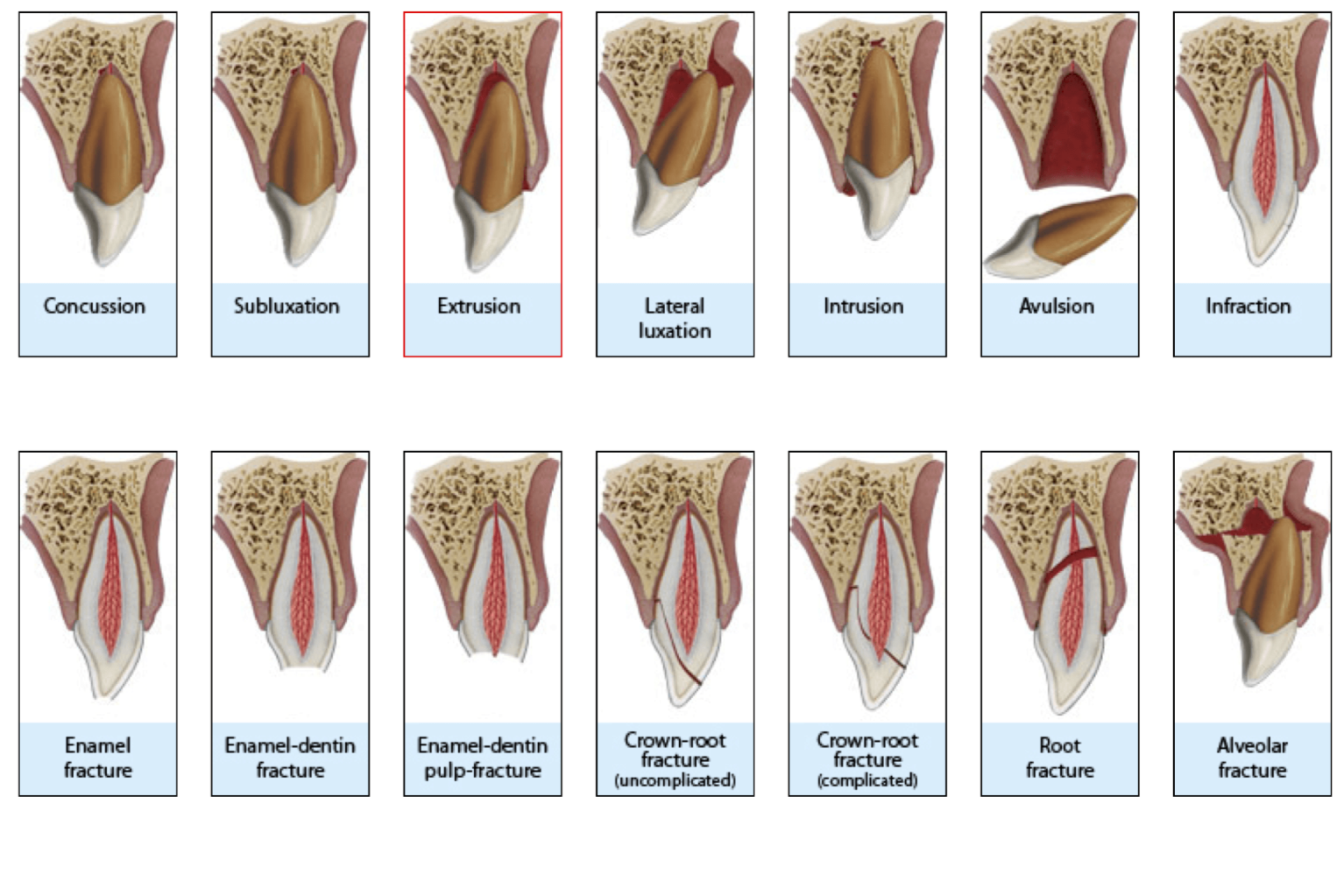
Management of Traumatic Dental Injuries
Traumatic dental injuries can occur as a result of falls, sports injuries, motor vehicle accidents, or other impacts to the mouth and teeth. These injuries can range from minor chips and cracks to displaced, loosened, or completely avulsed (knocked-out) teeth. Trauma may also damage the pulp, root, surrounding bone, or supporting tissues, and some complications may not become apparent until weeks, months, or even years after the initial injury. Prompt evaluation is important to accurately diagnose the extent of the injury and determine the most appropriate treatment. Depending on the type and severity of the trauma, treatment may include monitoring, splinting, vital pulp therapy, regenerative procedures, root canal therapy, root canal retreatment, or surgical treatment. Our goal is to preserve the natural tooth whenever possible, promote healing of the surrounding tissues, and minimize long-term complications.
Because traumatic injuries can have delayed consequences such as pulp necrosis, root resorption, infection, or arrested root development, routine follow-up examinations are a critical part of treatment. Regular evaluations by your endodontist, often including clinical examinations and radiographs, allow us to monitor healing, identify complications early, and intervene when necessary to give the tooth the best possible long-term prognosis. Since every traumatic injury is unique, treatment recommendations and follow-up schedules are individualized based on the specific condition of the tooth and supporting structures.