Regenerative Endodontic Procedures
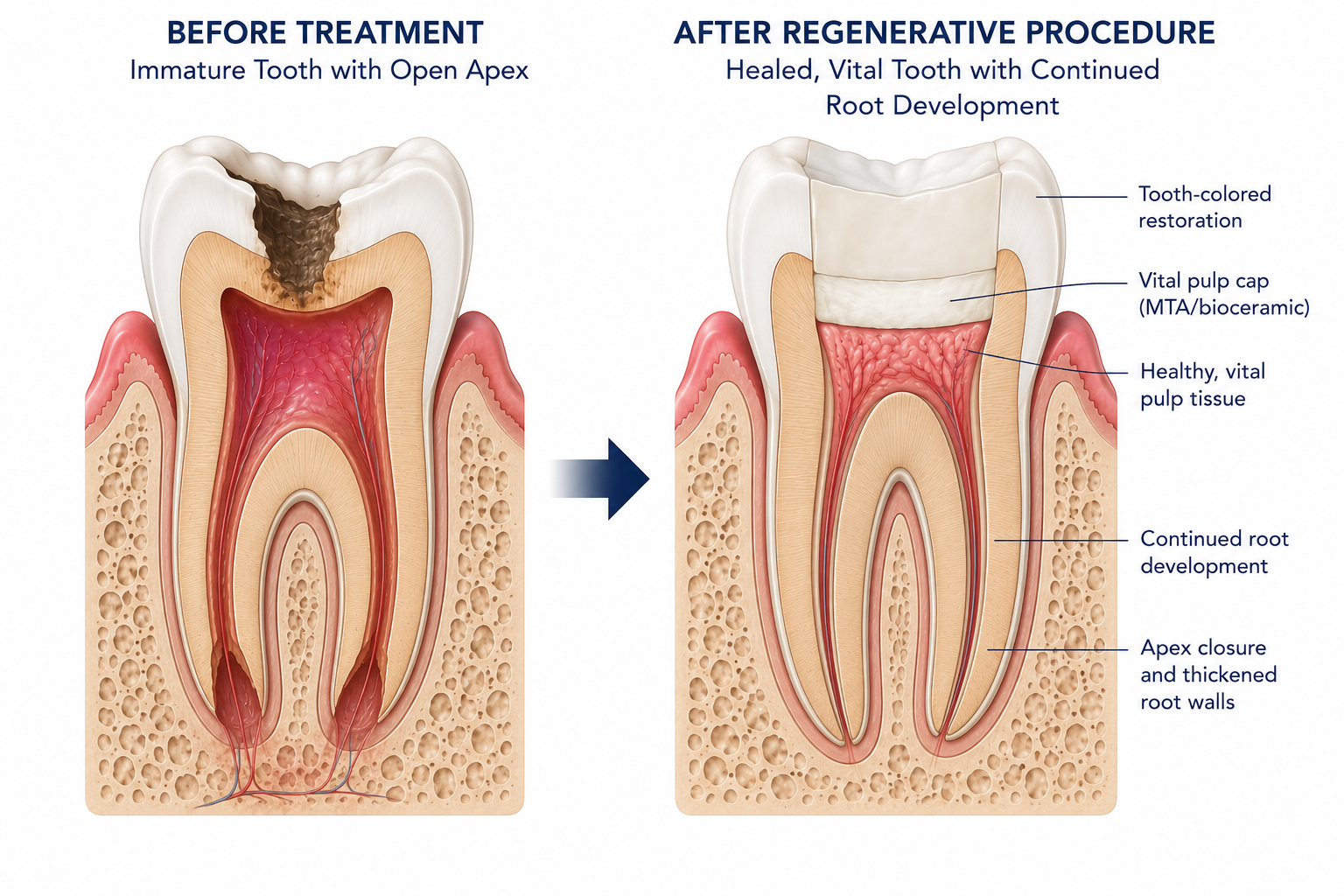
Regenerative endodontic procedures are specialized treatments designed to preserve or restore the vitality of a tooth whenever possible, particularly in young teeth that have not yet completed root development. These treatments may be recommended when the pulp has been injured by decay or trauma but still has the potential to heal, or when a developing tooth has become infected before the roots have fully formed. Depending on the diagnosis, treatment options may include vital pulp therapy to preserve healthy pulp tissue, apexogenesis to allow continued root development in a vital immature tooth, or revascularization to encourage healing and continued root maturation in an immature tooth with a necrotic pulp.
The goal of these procedures is to maintain or restore the tooth's natural defenses, promote continued root development when possible, and improve the long-term strength and prognosis of the tooth. Not all teeth are candidates for regenerative treatment, and your endodontist will determine the most appropriate option based on the stage of root development, pulp status, and overall condition of the tooth.