Endodontic Microsurgery (Apicoectomy)
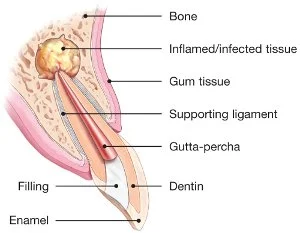
Endodontic microsurgery, also known as an apicoectomy, is a procedure used to save a tooth when infection persists after root canal treatment and cannot be predictably resolved through conventional retreatment alone. This may occur when bacteria remain in inaccessible areas of the root canal system, when infection persists on the external root surface, or when a large lesion around the root has not healed despite previous treatment.
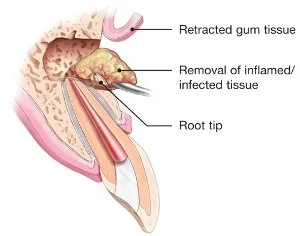
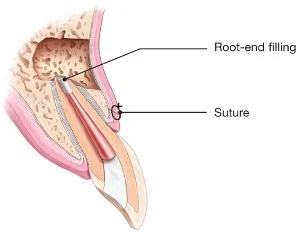
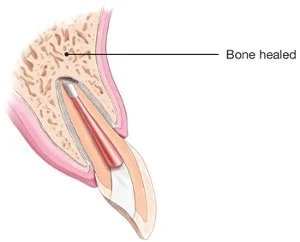
During apicoectomy, a small opening is made in the gum to access the root tip and surrounding infected tissue. The infected tissue is removed, the end of the root is cleaned and prepared, and a biocompatible filling is placed from the root end to create a seal and prevent reinfection. Endodontic microsurgery is performed using a surgical microscope and specialized microsurgical techniques designed to maximize precision and healing. Most patients experience only mild postoperative discomfort and can return to normal activities within a day or two. Modern endodontic microsurgery has a high success rate (over 90%) in appropriately selected cases, and can allow many teeth to be preserved that might otherwise require extraction.