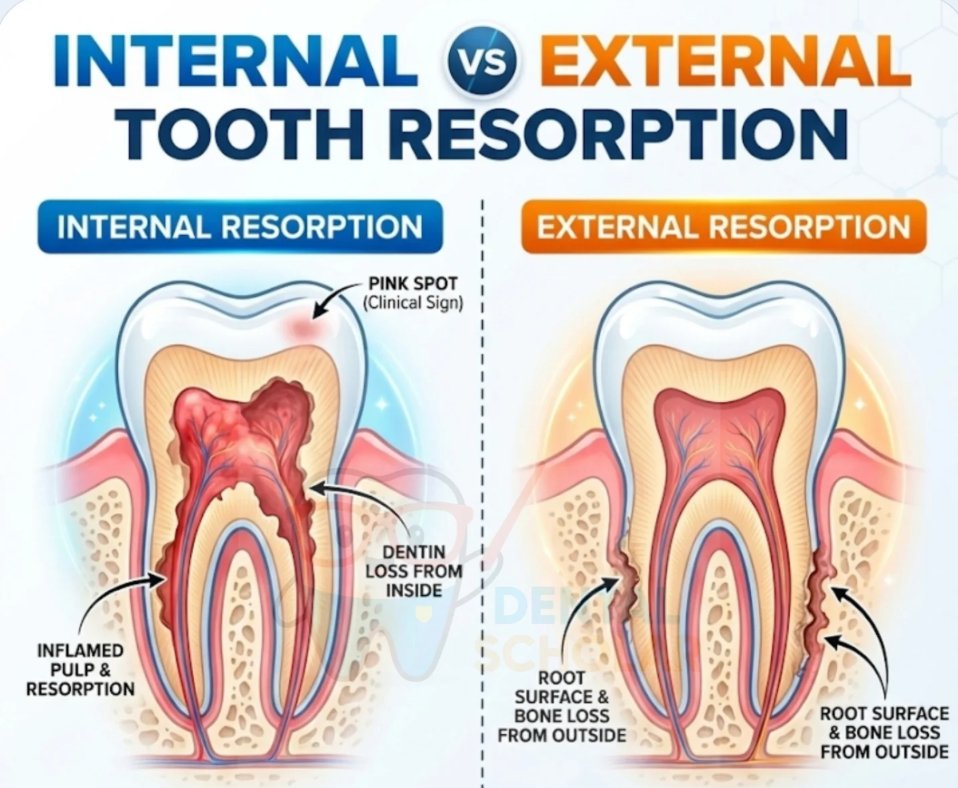
Resorption Repair
Root resorption is an inflammatory process that causes the body to break down and remove portions of a tooth's root structure. It can occur for a variety of reasons, including dental trauma, orthodontic treatment, chronic inflammation, certain genetic conditions, or sometimes with no identifiable cause. Depending on where the process begins, resorption is classified as either internal resorption, which starts inside the root canal space, or external resorption, which begins on the outer surface of the root. In many cases, patients have no symptoms and the condition is discovered on routine dental X-rays or CBCT imaging. Early diagnosis is important because untreated resorption can lead to progressive loss of tooth structure and, in some cases, tooth loss.
Treatment is tailored to the type, location, and extent of the resorptive defect. In many cases, the damaged tissue is removed, the area is thoroughly disinfected, and the defect is repaired using biocompatible materials designed to seal and restore the tooth. Depending on the situation, treatment may be completed through a non-surgical root canal procedure, a surgical approach, or a combination of both. Early diagnosis is critical, as resorption can progress silently and cause significant damage if left untreated. With appropriate treatment, many teeth affected by resorption can be stabilized and preserved for years to come.